Article

Motion in design: four conclusions
By Johnny Heyne

Written by
Niels Westerneng
--
We live in a strange age. At a time when more is possible than ever before in design, we seem to be falling back on the generic.
This is the paradox of technology; the sheer volume of choice and range of capabilities is overwhelming, but we settle for simple. One mainstream example of this scenario is the growth of flat design.
In this article, I will explore what flat design is, why it took hold, and what it represents. This is a controversial subject in the design world, and I will look at why flat design can stir such emotions in the profession. What does flat design mean for designers, and what does it mean for clients?
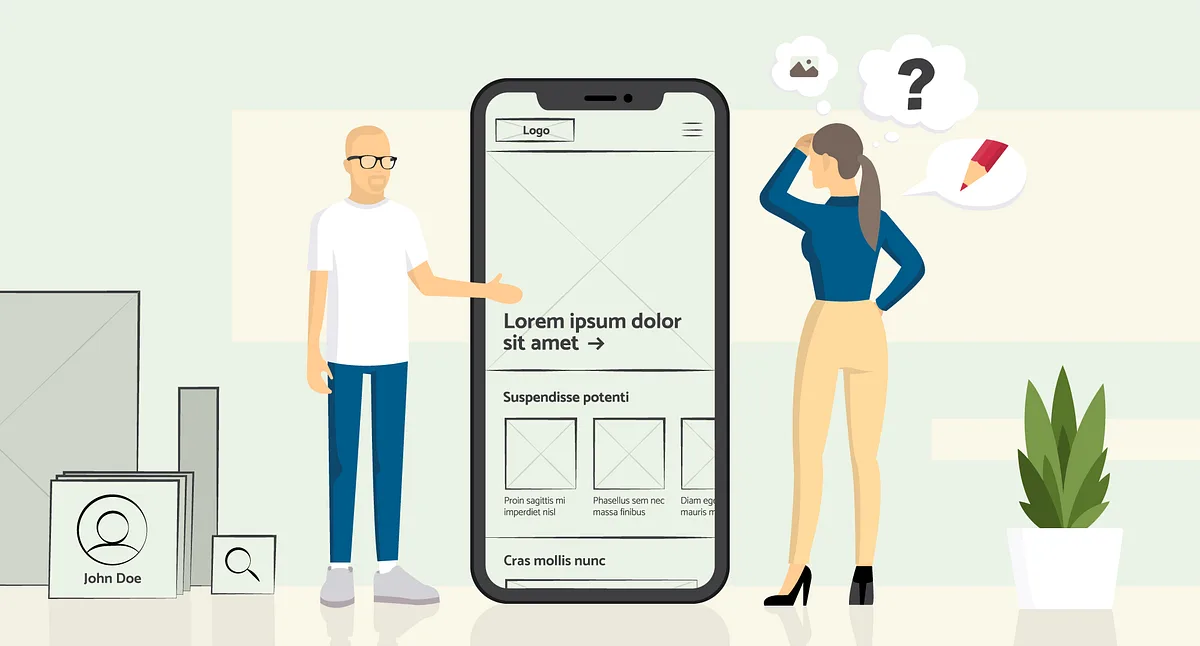
Flat design is an offshoot of minimalist themes, and is most easily explained by highlighting what it is not. It is not raised, sunken, or hollow elements. It is not realism or skeuomorphism. It is not 3D. In a nutshell, flat design makes no attempt to be realistic, glossy, or flashy. This is perfectly outlined by Tubik Studio on UX Planet:
“Nowadays the term is widely used as the opposite to rich design due to harmonic simplicity taken as the basis of this design approach. The most prominent feature which actually has inspired the name of this direction is applying flat 2-dimensional visual details as the opposite to highly realistic and detailed skeuomorphic images.”
Flat design has emerged as the go-to option in mainstream UX, something which is evident in any given app store. It is clearly prominent in theme libraries for platforms such as WordPress, Wix, Squarespace, and many others. It’s fair to say that most digital products at the moment use flat design, although this has subtly developed over time to include more detail.
“Material Design” is one such development, hitting the mainstream thanks to Google’s UI efforts. This approach adds slightly more depth and texture using layers, providing the effect of physical surfaces and edges. Some people refer to this as “Flat 2.0”. It is still far-removed from realism and skeuomorphism, but here’s Google’s description of its main principle and basis:
“Material Design is inspired by the physical world and its textures, including how they reflect light and cast shadows. Material surfaces reimagine the mediums of paper and ink.”
Although Material Design has pushed the boundaries somewhat, flat design still dominates the web. Let’s look at how it emerged and examine the benefits, drawbacks, and consequences.
Early versions of flat design appeared in graphic posters and artwork through the 20th century. However, it came to dominate when digital design took hold, as interfaces for websites and apps became a fresh canvas. Microsoft was a leading proponent, with flat design a key ingredient in the Windows Phone 7 interface, and later the Windows 8 “Metro” OS in 2012.
Apple followed suit in 2013, launching iOS 7 with a distinctly flat layout. Kate Moran’s article for Nielsen Norman Group showcases a timeline of Apple’s homepage between 2007 and 2015, highlighting the morph from skeuomorphism to flat design. The two biggest tech heavyweights catapulted flat design into the mainstream, setting the standard for others to follow.
The reasons for flat design’s unstoppable growth are more nuanced than this, however. Design has become increasingly commercialised, with digital platforms acting as income generators. Online media allows us to measure the complete funnel, which has kicked off a numbers game.
As a result, risk is mitigated and artistic freedom is limited. With science rightly uncovering the best recipe for maximum user engagement and conversions, brands and businesses follow that path.
This isn’t necessarily a bad thing. It is just the market. But it does mean that designers must adapt to the times — something I’ll explore later.
Some designers talk about flat design like it is the Antichrist. But there are genuine reasons for its growth in the mainstream. Without advantages, it wouldn’t have taken the world by storm.
I’m a designer, but I’m also a marketing strategist.
I can see it from both angles: the frustration stemming from a lack of artistic freedom, but also the reasons for the market demand.
1. Clean and sharp: Flat design is minimal, allowing for prominence of text and use of creative typography. Key messages can be communicated without clutter, and users can be guided very easily through a seamless journey.
2. Efficient: Flat design is essentially just rectangles, triangles, circles, and variants thereof. The simple shapes and modular layout makes it quick and efficient to design interfaces.
3. Responsive: Anything can be made responsive, of course. But flat design is easier than realistic or skeuomorphic elements. As a result, flat design works well across any type of device.
4. Less weight: Due to its simplicity, flat design tends to be lighter on the solution infrastructure, allowing quicker load times for the user.
1. Boring: Flat design can be tedious, particularly for designers themselves. Not much can be done creatively, meaning that focus tends to be on contrasts and colour combinations.
2. Ubiquity: Flat design is everywhere. For businesses that want to stand out with their website or app, this is no longer the route to take.
3. Unclear interactions: If flat design is rolled out ineffectively, it may not be clear where users can click, tap, or scroll. However, this comes down to basic bad design — regardless of style.
It’s no secret that flat design requires less skill than more intricate approaches to design. This isn’t a bitter criticism — it’s merely a fact.
However, flat design doesn’t equate to a bad designer, and nor does this mean that a bad designer can do flat design effectively.
That said, it has become somewhat of a leveller.
Talented designers find it more difficult than ever to showcase their skills and prove their value.
My colleague, Johnny, is a huge fan of motion. This is an area in which designers can elevate themselves and their work, and it can be united with flat design or Material Design methods. If the market demands a simple and minimalist design style, motion might be the area to make an impact.
As I mentioned earlier, flat design has forced designers to add value in alternative ways. The profession has shifted from possessing artistic skills to understanding human psychology and behaviour patterns.
In an age when the design work itself can often be done easier, the added value of a designer is to apply the designs for most impact.
Ten years ago, everybody viewed a website like a piece of art. Commercial motivations forced this into the background.
The function-first approach rightly trumps vanity, as the web becomes a more competitive space for local, national, and international businesses. Originally we‘d look to art schools for the designers of the future, but this has changed.
As design professionals, we’re constantly caught between pushing boundaries and meeting a tight client brief. But flat design is here whether we like it or not. Considering the varying levels of digital maturity in SMEs and large corporations, flat design will be desirable for a while yet.
That said, it is also our responsibility to fight through standard practice to launch new trends. As designers, we must think ten years ahead whilst accommodating current demands.
An evolution of flat design is already underway, with the growth of Material Design (Flat 2.0) and the use of motion. Texture and depth have survived the minimalist onslaught to emerge refreshed.
With the impact of voice-activated interfaces, we’re about to enter a new phase. Conversational AI, smart chatbots, and various types of virtual and augmented reality will change the designer’s role dramatically.
Soon you’ll be able to order groceries whilst in the shower by using the shower screen as an interface.
What does this mean for designers?
That’s a story for another day…
About the author
Niels Westerneng